Use Case: Personal Productivity Tooling
The throwaway app you end up keeping
I started using coding LLMs to quickly build one-off scripts whenever I needed something specific. Scripts are repeatable. They also capture knowledge, and what begins as a one-off script often gets used again.
Modern coding LLMs take that a lot further. They’re now good enough to build entire GUI applications from a single prompt. If you can describe what you want, they can build it for you. But which platform will you target? If you don’t say, the agent picks one for you: usually a single HTML file, sometimes a Python script, occasionally Electron. Each works on day one.
Just like one-off scripts, these applications often outlive their original purpose. The moment you want to integrate the tool into your workflow, run it on another machine, or share it with a colleague, those initial choices start to matter. What worked well enough for a quick experiment may turn out to be the wrong choice for something more permanent.
You don’t want to weigh those trade-offs when all you need is a tool to solve a specific problem. SolidRT lets you defer that decision: the agent writes SolidJS code in TypeScript, and SolidRT turns it into a native app that works across platforms. You can focus on what the tool needs to do, without having to decide how far it might eventually go.
The Scenario
While working on SolidRT itself, I had to compare some images. Plenty of image comparison tools exist, but finding one that works exactly the way I want takes time.
So I scaffolded a fresh SolidRT application, opened up my agent and wrote down exactly what I needed in a single prompt: load multiple images, switch between them with a key, zoom in to raw pixels without interpolation. Then I went to grab a coffee.
When I got back, the tool was ready. The agent used SolidRT’s MCP tooling to interact with the running app, checking its work with simulated mouse and keyboard events. It also wrote unit tests. I compared the images, fed the conclusions back into my original work and continued from there.
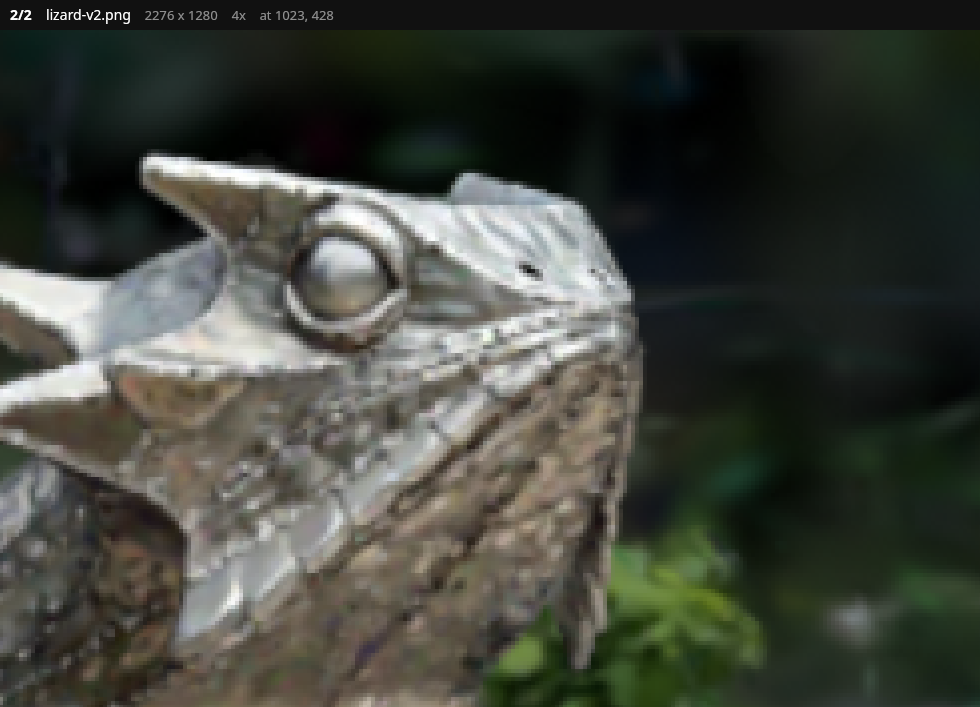
From that moment on, I had a tool that did exactly what I needed, for that specific problem. Its code was short and simple, since SolidRT provided the building blocks: windowing, file handling, keyboard and mouse interaction, image drawing and zooming. Later, I reached for it again in other scenarios, tweaking it slightly.
One codebase gives me a native app for Windows, macOS, Linux and Android. I can share the appropriate build with a colleague via a shared drive, a chat app, a download from my own website, anything really.
That’s the same story as the one-off scripts, now with a GUI. What started as a quick fix became part of my toolbox. I made one choice up front, SolidRT, and didn’t have to make the others until I needed to. If a tool eventually deserves more, I can optimize it, build a custom runtime to minimize its footprint, and turn it into a polished application without starting over.
Check out the source code on GitHub.